 What is plagiarism
Plagiarism is a serious breach of ethics at UNSW and it is not taken lightly.
What is plagiarism
Plagiarism is a serious breach of ethics at UNSW and it is not taken lightly.
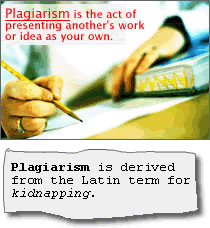 The idea of research is to study what others have published and form your own opinions. When you quote people - or even when you summarise or paraphrase information found in books, articles or web pages - you must acknowledge the original author.
It is plagiarism when you:
I find it difficult to write things in my own words...
 If you have difficulty writing up your assignment, try going through the contents of the UNSW Learning Centre guide Writing Lab Reports. Not knowing how to write up a lab report is not an excuse to plagiarise! Don't be tempted to 'cut and paste' blocks of information from the internet. The Learning Centre is also a great place to go to for assistance in general study skills (such as Effective Reading and Effective Note-making from Written Text.)
Plagiarism - useful links
 |
|
Plagiarism? It's Your Call!
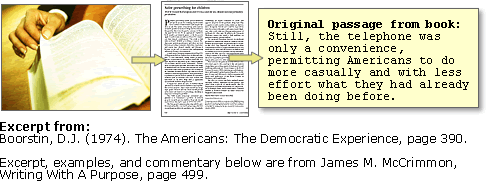
Plagiarism ranges from copying word-for-word to paraphrasing a passage without credit and changing only a few words. Below is a sentence from a book. The original source is followed by its use in three student papers. For each student's version check the comments to see if the passage would be considered plagiarism.
 |
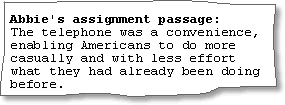 |
 Click here to see comments on Abbie's passage. Click here to see comments on Abbie's passage. |
 |
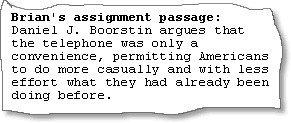 |
Click here to see comments on Brian's passage. |
 |
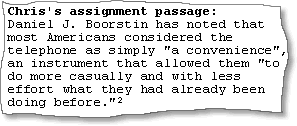 |
Click here to see comments on Chris's passage. |
| 6.1 | Module 6 objectives |
| 6.2 | What is plagiarism |
| 6.3 | Referencing in the APA style |
| 6.4 | Module 6 review |
| --> | ILS Home |


